Check photographic conditions
Are angles similar, hair lengths comparable and the scalp dry? Strong shadow or different lighting can alter contrast. Filters and shine may change pigment appearance. Look at the whole head as well as selected crops. A good comparison supports questions, but does not replace individual assessment.
Ask about healing and session
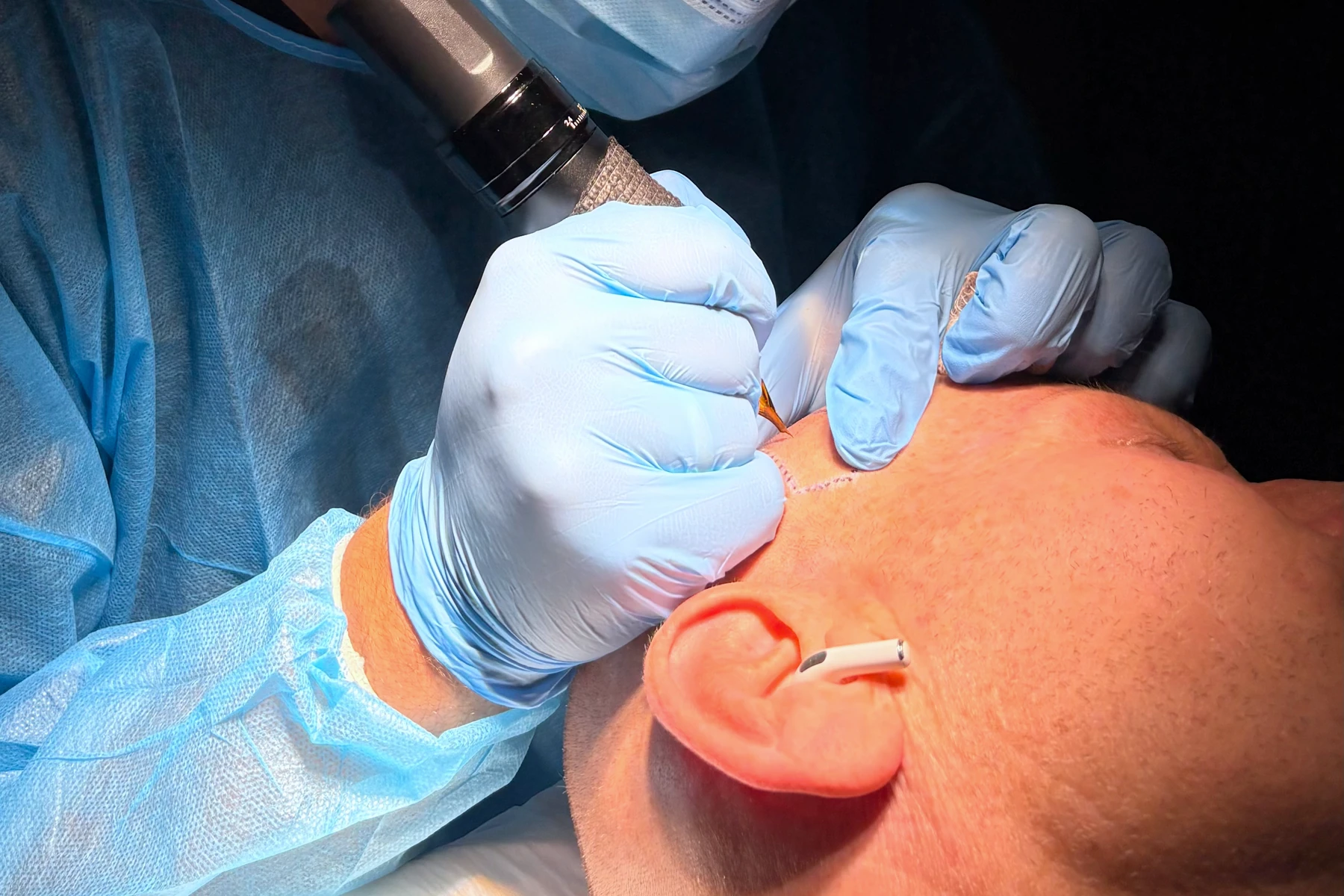
A same-day photograph differs from a healed result. Ask when it was taken and how many sessions preceded it. An example’s session count does not automatically apply to you. A strong result on one scalp does not guarantee another starting point. Bring the image to discuss expectations.
Stock is not a patient result
Illustrative images can show hair or scalp without proving treatment. Stock imagery on this website is labelled separately. Genuine before-and-after images should show the same person and require publication consent. Ask for context if unsure. A transparent gallery makes these distinctions visible rather than treating every photograph as evidence.
Applying this to your situation
Ask whether photographs show fresh or healed work. Fresh, darker pigment may look striking but is not the right measure of the finished appearance. Hair length and skin shine also matter. A useful comparison uses similar conditions and identifies the treated areas.
What matters besides the photograph?
Ask what was performed, how many sessions were completed and whether the image shows healed skin. A context-free close-up can create expectations unsuited to your situation. Discuss maintenance and hair length too. Treat examples as a starting point rather than a promise of an identical outcome.
What we consider in your assessment
Ask whether the image shows fresh pigment or a healed result. Then look for comparable hair length and lighting. That context makes the image useful and helps you ask focused questions about your options.
Your next step with Mehmet
Look at both detail and overview images during an introduction. Ask whether photographs show fresh treatment or healed skin. Mehmet can explain the design decisions and why the approach may need adapting for your hair.